Top Ad 728x90

Showing posts with label discoveries. Show all posts

Saturday, May 30, 2015

Earth’s 10 Most Unexplained Discoveries Ever!

by

Antikythera Mechanism
Have you ever seen machinery dating back to about 100 BC? Nope I guess, but it is true. An intricate machine was found in a shipwreck near Greece that is equipped with gears and structures. It is believed the ancient machine was made to figure our astronomical positions.

Baghdad Batteries
Do you know the Baghdadis had electricity generation technique hundreds of years before the normal batteries were invented? It is surprising, but true. Initially the structure was thought to be normal vases, but later it was discovered to have housed copper rod that shows evidence of acid corrosion. Did they really generate electricity?
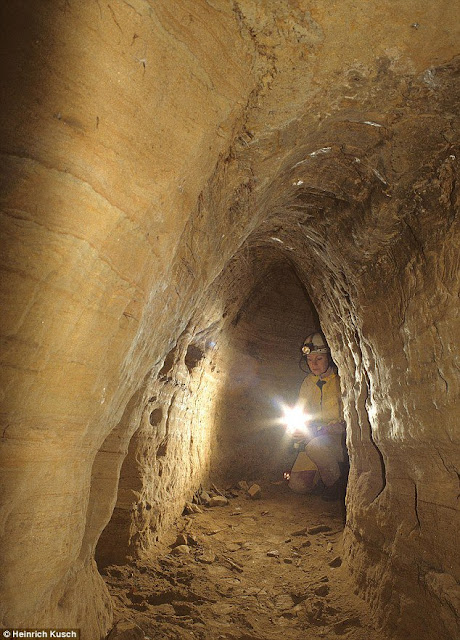
Tunnels During Stone Age
These tunnels are very extensive and the real purpose is still unknown. It dates back to the Stone Age.

Costa Rica’s Stone Balls
Hundreds of stone balls are discovered in Costa Rica and these ranges between the sizes of 3 cm and 3 metres. All are perfectly spherical and no one knows what were the purposes of these balls.


Voynich Manuscript
This image is of illustrated and hand-written book, but still no one knows anything about its dialect. However, two people did claim earlier to have deciphered the scrip, but it seems either one, or both of them are wrong. One says it is an extinct Mexican language and the other person believes it to be an Asian extract.


Yonaguni Monument
The Yonaguni monument is lying on the sea bed and it is still debated whether man designed it or its a naturally occurring formation. However, you can see distinct flat surfaces and 90 degree angles in the image. Was it chiselled by sea lions? Just give a thought.


Zonnepoort
Similar to the Stonehenge, this Gate of the Sun is a huge structure about 13,000 feet above sea level. It is not clear how the structure was made and for what purpose. However, the engravings look to have astrological and astronomical importance. It is in Bolivia.

Longyou Grottoes
This is handmade caves. It dates back to the Qin Dynasty in China. You may not find any record of the caves and so no explanation is available anywhere.


Mount Owen Moa
This is preserved very well. It is of a flightless bird called Upland Moa. It got extinct about 500 years ago. The image is of 3000 year old talon of the bird.


Unfinished Obelisk
If you want to know a little about Ancient-Egyptian construction methods, this may be a bit of help. The image show the structure carved directly from bedrock. The work was unfinished as cracks were found emerging in the marble.


Daily Leap

Saturday, May 9, 2015

Connection Revealed Between the Similarities of Mars' Structure to Ancient Structure in Japan

by


May 9, 2015 - Kofun are megalithic tombs or tumuli in Japan, constructed between the early 3rd century and the early 7th century AD.

They gave their name to the Kofun period (middle 3rd century to early-middle 6th century). Many of the Kofun have distinctive keyhole-shaped mounds (zenpo -koenfun (前方後円墳?)), which are unique to ancient Japan. – Wikipedia.

The structure we see in Japan is unique, sharp edges and unique patterns define this incredible construction built in ancient Japan. But is there something more to this construction? Is there a small possibility that the structure found in Japan has a mysterious connection, a otherworldly connection perhaps? We believe the answer is Yes.

We don’t have to look “too far”, on the Red Planet, NASA has identified a structure that has immense similarities to the construction found in Japan.


So what does NASA say about this finding on Mars? Well, according to them, these straight line and defined edges could be a result of fractures associated with faults or a hill that could have been raised by the fault. Its current shape is the overall result of the surrounding Martian terrain which has been eroded for millions of years. But is this explanation enough? We have seen quite a few unique shapes on Mars that can be traced back to similar structures on Earth.

Cold this be proof that ancient mankind was in contact with extraterrestrial beings? Is it possible that millions of years ago Earth was connected to the red planet in a way that we today do not understand? We believe that all options are open for debate! Let us know what you think and post your comments below.


Here are some more images of these two structures:


Disclose TV
Source


Saturday, April 18, 2015

10 Mysterious Mummies From Around The World

by
Many people associate mummies with ancient Egypt, but the mummification is a process that was used world-wide in ancient times.

In this article we take a look at some of the most mysterious mummies we have come across.

Some of them are truly unique and make scientists scratch their heads.


In 2000, a strange story was published in the Egyptian magazine Rose El-Yussuf. According to the magazine's writer, in the 80s, the French Egyptologist, Louis Caparat, discovered a secret chamber with a crystal container (tomb) inside the Great Pyramid of Cheops. In the container (tomb), there was lying an alien humanoid that appeared to be in a dormant state. The scientist also found an ancient papyrus which described a meeting of the alien with Pharaoh Khufu (2589-2566 B.C.), commonly known as Cheops.

Further, the ancient document informed that some day in the future, the alien's space-traveling species would arrive from the stars.

The alien also made a suggestion regarding the construction of a pyramid as his resting place

  
2. America's Mysterious Pedro Mountain Mummy                                                           In 1932 when Cecil Main and Frank Carr were digging for gold in the San Pedro Mountains about 60 miles southwest of Casper, Wyoming, they discovered the strange story of a curious very small mummy that later became known as the Pedro Mummy.

The small size and the features of the ancient body indicated it could once have been a member of the hidden race of the Little People living in America.

Many ancient Native American legends tell of a group of beings that are commonly referred to as the Little People. These small beings are sometimes said to me spirits, magicians, ferocious dwarves, fairies, or devils, depending on the tribe's original folklore.

After the discovery of the Pedro mummy, the legends of the Nimerigar were brought to life again.

Is it possible the Pedro mummy was once a member of the Little People?


3. Forgotten Mysterious Mini-Mummy Discovered In Ancient Egyptian Tomb
This is an astonishing discovery archaeologists made a while back and there are still many unanswered questions. How and why did this mysterious mini-woman end up in an ancient Egyptian tomb? Was she a woman of high power and influence? Did she play an important role in the ancient Egyptian society?

The mummy, measuring just 3.2 feet (97 centimeters) dates back to the Roman era. She was discovered in a 2,000-year-old tomb in the Bahariya Oasis, about 225 miles southwest of Cairo.

Archaeologist Mahmoud Afifi, who headed the dig, said she was covered in intricately molded plaster that shows her wearing a tunic, headscarf, necklace, bracelet and shoes. She was dressed in Roman robes and scientists think that the burial style indicates she belonged to Egypt's long period of Roman rule, from 31 B.C. until the Arab invasions of the 7th century.

We nay never know the true identity of the mini-woman discovered in the mysterious tomb.

 
4. The Blinking Mummy Rosalía Lombardo
Known as the Girl in the Glass Coffin or Sleeping Beauty, Rosalía Lombardo is widely considered one of the best preserved mummies in the world. The girl died in 1920 at the age of two of pneumonia in 1920. Rosalia's father was so sorely grieved upon her death that he approached Dr. Alfredo Salafia, a noted embalmer and taxidermist, to preserve her. She was one of the last corpses to be admitted to the Capuchin catacombs of Palermo, Sicily where about 8,000 mummies are being kept. She soon became one of the most well-known.

Her preservation is such that it appears as if she were only sleeping.

According to the Peruvian journal El Comercio, scientists interested in learning more about the embalming techniques employed in Rosalía's body put a camera inside her sarcophagus, capable of taking pictures every 60 seconds. What happened next came as a surprise. The images taken by the camera seemed to show the little mummy's blue intact eyes were opening and closing several times every day. This weird phenomenon has been the subject of various speculations for some years.


5. The Mystery Of Ancient Egypt’s Red Haired Mummies
Do we really know, genetically speaking, where the so called dynastic Egyptians came from? Some presume they were exclusively of black African origin, while others speculate that they came from lands to the east, were of a complex racial mix, or in fact had as their source Egypt itself.

Can we tell, based on the facial features of sculptures such as this, presumably of Rameses II, an idea of his ethnic ancestry? What is perhaps far more curious is the presence of mummies from ancient Egypt that had red, and in some cases even blonde hair.

 
6. Mysterious "Perfectly Preserved" 300-Year-Old Mummy Baffles Archaeologists
Archaeologists have made yet another incredible discovery. When experts opened a 300 year-old coffin they found perfectly preserved body! What happened next is somewhat of a mystery and archaeologists have begun an investigation. Inside the tomb were three coffins. Two of the coffins contained remains bodies that had reduced to skeletons. The third coffin contained a mummy that had an unusually well-preserved body


7. Lady Of The Mask: Wari Mummy With Faked Blue Eyes
The Lady of the Mask, a Wari mummy is extraordinary because of her faked blue eyes. It is a face you don't forget easily. The Wari people lived in the Andean highlands of central Peru, but their influence reached beyond the highlands to the Pacific coastline.

The Wari culture is believed to have flourished D 600-1000, meaning before the Incas. Unfortunately these people never developed a written language and left no inscriptions that would provide critical clues to their customs and beliefs.

A 1,300-year-old-mummy unearthed by archaeologists excavating a pyramid in Peru's capital city Lima could in time reveal the secrets of this lost culture. The mummy is assumed to be a noblewoman because of the ornate mask - was found in a crouching position surrounded by ceramics and textiles
 
8. Remarkable Mummy Reveals Dwarfs Lived 5,000 Years Ago In The City Of Makhunik
Some archaeologists have suggested that the city of Makhunik was once inhabited by ancient dwarfs. Others are denying the possibility. Makhunik is an an ancient Iranian city unearthed in Shahdad, Kerman province. Nobody thought an ancient civilization could exist in this desert until 1946. Scientific and archeological excavations were conducted in this region during 1948-56. Cemeteries belonging to 2nd and 3rd millennium BC and copper furnaces were discovered during eight excavation phases. Relics discovered in Shahdad's cemeteries included numerous potteries and brassware.

A significant aspect about Shahdad is the strange architecture of the houses, alleys and equipment discovered. The walls, ceiling, furnaces, shelves and all the equipments could only be used by dwarfs. After the discovery of City of Dwarfs in Shahdad and stories about peoples who lived there, rumors circulated about the discovery of a dwarf's remains. The latest case pertained to the discovery of a dwarf mummy with a height of 25 cm


9. Bizarre Mummy With Giant Head Discovered In Peru
A very strange abnormal-looking mummy with giant head has been unearthed in Peru. The discovery was made in the Cuzco region, the heart of Incan civilization. Researchers find the mummy extremely odd. The mummy simply does not fit in with the version of history that we have all been taught. The mummy's head is triangular and its eye cavities are very big. "It's 20 inches tall, which doesn't coincide with the stereotypes of humans. It's head is triangular and the eye cavities are too big.

The lower front part of the jaw has a kind of fin that doesn't exist in any ethnicity in the world.

 
10. 2600-Year-Old Mummy With A Metal Screw In The Leg
An ancient nine-inch metal screw found in the 2600-year-old mummy of an Egyptian priest Usermontu's leg became a worldwide sensation. The discovery was made in 1996. Dr. Wilfred Griggs, Egyptologist and a professor of ancient scripture at Brigham Young University was doing research on mummy DNA in the six resident mummies on display in the Museum, when an X-ray revealed a metal screw near the kneecap of Usermontu. ("DNA Research Conducted on Egyptian Museum Mummies," Rosicrucian Digest, 1995)

The metal screw, connecting the mummy's thigh and lower leg, is now attracting worldwide attention because it is believed to be the first known example of ancient limb reattachment. This particular mummy was acquired by the Rosicrucian Egyptian Museum in 1971


Messagetoeagle


Monday, February 9, 2015

SUPER SATURN-Distant World Has Rings 200 Times Bigger Than the Rings of Saturn

by
At least thirty rings might encircle the large planet J1407b, making a disk thus wide it took 2 months to pass ahead of its star.


A team of U.S. and British astronomers has found what is also a large planet with rings two hundredtimes the scale of Saturn's.

The distant world, called J1407b and 1st noticed four years agone, orbits a star settled concerning430 light-years from Earth—relatively near in cosmic terms. It's most likely between 10 and fortytimes as huge as Jupiter, consistent with Matthew Kenworthy of the University of Leiden, within theEuropean nation, lead author of a paper concerning the invention that may be revealed within theuranology Journal. The study reveals new details concerning the structure of the large ring system.

As huge because the planet itself is, big worlds are not particularly uncommon among the two,000about exoplanets confirmed by astronomers up to now. however this planet is that the 1st to besuspected of getting a hoop system like Saturn's—except it is so massive that if Saturn's rings were this size, they'd stretch halfway to Jupiter.

The discovery of the large rings was fully accidental. In 2011, Mark Pecaut, then a college boy at the University of Rochester, in big apple, was viewing knowledge from the SuperWASP exoplanet search. He was fascinated by stars, not planets, however the SuperWASP archive had knowledgeon these yet, and specifically on the rotation rates of young stars in an exceedingly cluster calledthe Scorpius-Centaurus Association.

All of the celebrities looked ordinary, apart from one. Pecaut (now at Rockhurst University, in Kansas town, Missouri) noticed associate odd waxing and waning of the star's light-weight, saysauthor Eric Mamajek of the University of Rochester, "and after I 1st saw his output signal, I knew we tend to had found one thing remarkably weird."

Instead of dimming slightly for a number of hours, as would happen if a planet passed ahead of the star, this star had flickered for concerning 2 months—dimmer for a short while, then slightly brighter, then rheostat once more. "At first," says Kenworthy, "you suppose you are simply viewing noisewithin the camera." however the data was terribly clear. "It's one among the foremost stunningknowledge sets I've ever seen," he says.

The astronomers completed quickly that they could be viewing a system of rings passing ahead of the star. except for the rings' passage to last 2 months, they might ought to be mammoth, a lot oflarger than any ever seen before. The team worked onerous to visualize if there may be another explanation—individual clouds of dirt dimming the star, as an example. In 2012, once a year ofthought, they proclaimed their notice.

Even then, the claim of an enormous ring system was audacious. it absolutely was met with plentyof raised eyebrows, recollects Mamajek. The new analysis has mitigated the skepticism somewhat by nailing down the rings' structure a lot of exactly, and showing however the rings wouldmanufacture simply the pattern of aflicker the astronomers saw.

Young Rings in Transition?

The fact that this star and everything related to it's solely sixteen million years previous, however, compared with the sun's four.59 billion years, still poses a possible drawback. If the rings square measure that young, the outer components ought to condense into moons comparatively soon—the same factor that happened with Saturn within the early history of our own system. it is a exceptionalcoincidence that astronomers managed to identify it throughout such a transient section of its life.

"A complex, transient ring system isn't implausible," says Penn State's Eric Ford, World Health Organization focuses on exoplanets. however he will think about the coincidence probablyregarding. "You ought to surprise however doubtless it's," he says, "that you'd see one thingthroughout such a comparatively fast transition."

Adding to the uncertainty is that the undeniable fact that the world that is presumptively snuggledat the middle of the ring system is not nearly as straightforward to visualize because the rings themselves. In fact, the astronomers will solely deduce its presence. It may be, however, that it is notdoable for North American country to visualize at this angle. (Kenworthy has created associateanimation to point out however this is able to work.)

Another drawback, the authors acknowledge, is that the ring system, if that is what it's, has passedahead of the star one time. The signal, says Harvard uranologist David Kipping, is "interesting,however while not repeat observations i feel it's being treated sceptically at this stage."

But that does not mean it's being pink-slipped. Mamajek, Kenworthy, and their colleagues square measure watching the star rigorously in anticipation of that crucial repeat observation. They've even recruited a gaggle of high-level amateur astronomers, the yankee Association of variable Observers,to assist out.

"It are going to be terribly attention-grabbing to visualize what image forms as every new observation adds a replacement piece of the puzzle," says Natalie Batalha, a number one member of the team behind NASA's wildly triple-crown astronomer planet-hunting mission. "This may so find yourself being the primary ringed planet [found] outside our system."


National Geographic
Source


Wednesday, July 30, 2014

One Tree Grows 40 Types of Fruit

by

Sam Van Aken created a tree that "grows over forty different types of stone fruit including peaches, plums, apricots, nectarines, cherries, and almonds."

Even the most beautiful trees tend to bloom in only a single color, but artist Sam Van Aken is growing trees that turn into a kaleidoscopic array of flowers come spring. A project of his, the "Tree of 40 Fruit," has Van Aken grafting 40 different stone fruit branches onto a single tree, ultimately creating a tree that will slowly begin blooming at the beginning of spring and continue through the season as different varieties hit their marks. Come summer, those will all begin to grow fruits, including different types of cherries, peaches, plums, nectarines, and apricots.


Sam_van_aken_harvest_2013_07-465x700_medium


Van Aken, who tells Epicurious that he grew up on a farm, uses a technique called grafting to combine the similar fruit types onto a single tree. His use of the technique is certainly on the uncommon side, though similarly expansive efforts have been done before — The Daily Mail reports that a man in England put 250 varieties of apples on a single tree. Van Aken's trees are certainly designed more for the art of their blooming, but there's a preservation element that he's bringing in to it too. Van Aken says that he tries to include local fruits on each of his trees, as well as varieties that aren't commercially available.

None of the trees appear to be quite as grand in scope yet as Van Aken's gorgeous rendering (above) imagines them to be. For now, they're still young and small, but photos on Van Aken's "Tree of 40 Fruit" website show that they're already beginning to display what makes them so unique. The trees are currently spread across the US, with the majority of them around New York and New England. Epicurious reports that there are 16 of them so far, located in museums, community centers, and some private collections.

Sam_van_aken_tree_31_sp_2013-525x700_medium

Sam_van_aken_tree_75-525x700_medium


The Verge
source

The Seven Weirdest Creatures Under the Sea

by

If you're looking for a good fright, forget about going to see a horror movie, or wandering through a cemetery in the middle of the night. Just flip on the National Geographic channel and find yourself a good documentary about the horrors lurking under the sea.

Living thousands of feet below the water's surface may not have done these creatures any favors in the looks department, but it has led to some utterly bizarre adaptations that let mother nature's ugly step-children survive in their unique environment. And while it's fun to point and stare at how hideous they all are, just remember they'd probably do the same to us if they visited dry land.


Image result for Deepstaria enigmatica

Deepstaria enigmatica

Not only may you never want to sleep again after seeing this undulating sheet of brown goo writhing its way across your screen, you'll never want to use blankets again either. We'll take a hungry great white shark over this creature any day—at least we know which end is up there.


Psychedelic Fish

It gets its name from its tie-dye-like skin, but the Psychedelic fish is also known as the Frog fish because of the way it uses its lower fins to hop and crawl along the ocean floor. And for some reason its back fin is perpetually twisted to the side making it difficult for the fish to swim straight ahead. Is this mother nature's version of a Nascar driver?


Pacific Barreleye Fish

More formally known as the Macropinna Microstoma, the Barreleye Fish's eyes are protected beneath a clear soft dome that lets it keep an eye on prey floating above and all around it. It's also got kind of a cool fighter pilot thing going on.


Predatory Tunicate

Growing out of the ocean floor like water-filled plants, Tunicates are usually passive feeders. But this predatory version lures in other sea life through its large gaping mouth, trapping and digesting them for dinner. Didn't we see its bigger brother show up in one of those Star Warsfilms?


Prehistoric Frilled Shark

Frills are supposed to be a cute addition to a little girl's outfit. So why are prehistoric creatures like the Velociraptors in Jurassic Park, and this rare Frilled Shark, making them part of our nightmares? This bizarre-looking shark somehow manages to make even Jaws seem adorable.


Pistol Shrimp

This little guy actually looks like your run-of-the-mill shrimp, but it's what it does with its pincers that's utterly bizarre. It's called the Pistol Shrimp because it's able to cock and slam its pincers shut with so much force that it produces a super-heated blast of water that stuns its prey. Easily making this the world's most deadliest beatnik.


Vampyroteuthis Infernalis 
(aka The Vampire Squid From Hell)

Being compared to a vampire straight from the gates of hell can't be great for its self-esteem. But this unusual creature—that falls somewhere between an octopus and a squid—lives up to its name with barbed tentacles, glowing eyes, squirting phosphorescent ink, and the ability to turn itself inside-out into a spiky ball of horror.


Gizmodo

Top Ad 728x90